Press Release EARA Responds to EU Livestock Strategy and Publishes A Regenerative Livestock Strategy for Europe
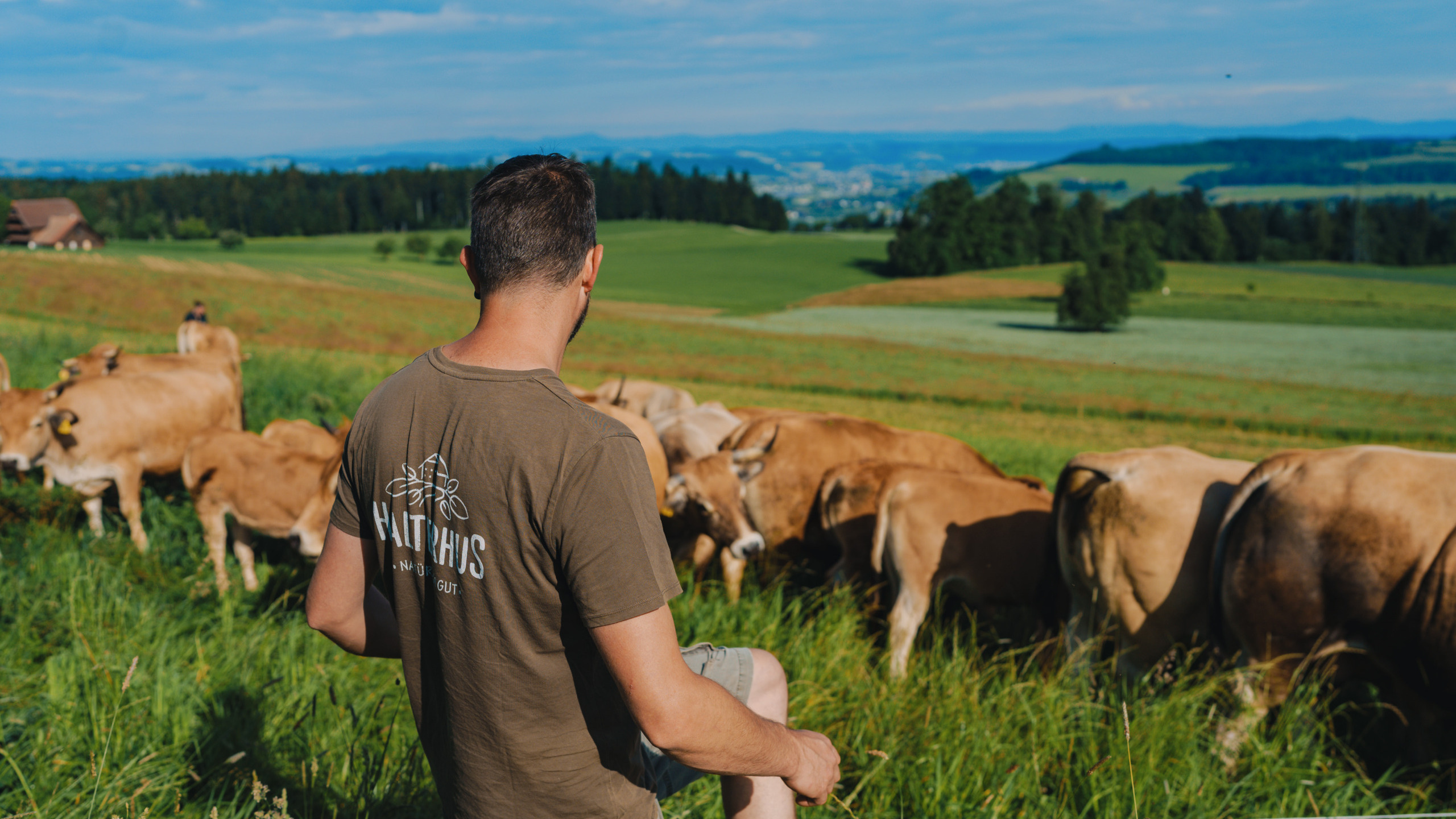
EARA welcomes several substantive elements of the Commission’s strategy published today but believes it falls short of the ambitious transition to regenerative agriculture that the European agrifood system needs to ensure long-term climate and social resilience underpinned by economic competitiveness.
The EC’s explicit acknowledgement that emissions methodologies do not capture the diversity of production systems together with the commitment to develop harmonised farm-level metrics, the recognition of feed import dependency as a strategic vulnerability, and the inclusion of mobile slaughter infrastructure and local processing in the strategy’s territorial chapter represent genuine progress and meaningful points of convergence with EARA’s own analysis.
The strategy’s framing of grazing and extensive systems as structurally less competitive than intensive models, however, reflects the policy assumptions of the past rather than the evidence emerging from the field. EARA’s research demonstrates that pioneering regenerative farmers are achieving higher full productivity than the European average, not lower. This reframing matters enormously for what follows: if extensive systems are understood as strategic investments in food security and ecosystem resilience, the policy instruments that support them change fundamentally in character.
The sustainability compass introduced in the Commission’s strategy is a potentially significant mechanism. Its value will depend entirely on how it is designed, whether its indicators capture ecosystem function and full productivity, or whether it reproduces the narrow metrics of existing frameworks. EARA stands ready to contribute to its development.
EARA submitted more than 30 pages of its farmers’ experiences and scientific references as part of the livestock workstream process over the past several months. As the European Commission publishes its EU Livestock Strategy today, EARA is releasing its own contribution to the debate: A Regenerative Livestock Strategy for Europe. The report synthesises EARA’s submission to the livestock workstream to make that farmer knowledge and science widely available in an effort to help stakeholders across the agrifood chain benefit from those experiences.
The structural challenge
The EU livestock sector is in structural difficulty. Farm numbers have declined by more than 37% between 2005 and 2020, with extensive, mixed and grass-based systems bearing the sharpest losses. Average EU livestock farms import over 30% of their feed from outside the Union, creating deep exposure to commodity price cycles and geopolitical instability. Disease outbreaks are increasing in frequency. Margins remain volatile and dependent on public subsidies. Rural communities built around livestock farming face the compounding pressures of land abandonment, ageing farm populations, and a generational renewal crisis.
At the same time, a growing community of pioneering farmers, from Finland to Spain, from Hungary to Ireland, is demonstrating that land-integrated, pasture-based livestock production can deliver stable incomes without imported feed, restore degraded soils, support biodiversity, and produce food of demonstrably higher nutritional quality. EARA’s farmer-led research programme, covering 14 EU countries and published in February 2026, found that regenerating farms achieved 33% higher full productivity on average, with 61% less synthetic nitrogen, 75% fewer pesticides, and similar caloric yields to conventional systems, while sourcing their feed exclusively from within Europe.
Livestock as a regeneration tool, not an environmental liability
The debate on livestock in Europe has been framed too often as a binary choice: between productivity and environment, between food security and climate, between farming and nature. EARA’s position, grounded in farmer practice and in the growing body of agroecological science, is that well-managed, land-integrated livestock is a key regeneration tool for Europe’s ecosystems, its rural communities, and its food sovereignty, not a problem to be minimised.
Ruminants grazing diverse, permanent pastures on planned rotational cycles return nutrients to the soil, support microbial life, improve water infiltration, maintain habitats that would otherwise collapse under scrub encroachment, and convert biomass from land that cannot grow human-edible crops into high-quality protein. Grazing animals managed with care are among the few scalable tools available to maintain the permanent grassland ecosystems that cover a significant share of Europe’s agricultural land and sustain biodiversity that no other production system can replicate. When livestock is disconnected from land, housed, fed on imported grain, its waste managed as a pollution problem, these ecosystem services disappear, and what remains is fragility.
Five arguments, grounded in evidence and farmer practice
EARA’s paper advances five interconnected arguments for the transformation of European livestock policy.
Economic resilience
On economic resilience, the paper argues that the current model’s dependence on imported feed, commodity export markets, and structural public subsidies represents fragility dressed as efficiency. Regenerating, pasture-based systems that source feed within their bioregion, integrate livestock with crop rotations, and produce for high-value regional markets are demonstrably more resilient, as EARA’s research across 14 countries confirms.
Regenerative grazing cuts the costs associated with external inputs, expensive infrastructure and feed. When animals are connected to the land, the farm becomes more self-sufficient and more competitive, not less.
— Trond Ivar Qvale, organic regenerative farmer, Norway
Environmental performance
On environmental performance, the paper challenges the standard life cycle assessment methods that systematically misrepresent the comparative performance of pasture-based and intensive systems by excluding soil organic carbon dynamics, methane cycling in grassland soils, and the full upstream emissions of industrial feed production. The paper calls for a more complete methodology, one that the Commission’s own strategy has, encouragingly, acknowledged is needed.
The animals are tools for achieving specific ecological outcomes, restoring soil health, encouraging native plant species, rebuilding hydrology. Resilience comes from diversity, locality, and ecological awareness. That is what makes a farming system durable over time.— Nick Viney, Leewood Farm, Dartmoor, United Kingdom
Animal health and welfare
On animal health and welfare, the paper advances the case for ecosystem resilience as the foundation of disease prevention, rather than pharmaceutical control and biosecurity through isolation. Locally adapted breeds, multi-species integration, rotational grazing, and the immune function that develops in animals living natural outdoor lives represent a fundamentally different and more durable approach to animal health, one that is already proving its value across EARA’s farmer network.
The pursuit of total sterility and environmental control often creates the very conditions it seeks to prevent, concentrations of animals with weakened immune systems where disease spreads faster and harder. Ecosystem resilience is the real foundation of animal health.
— José Luís de Castro, Villanueva de la Vera, Extremadura, Spain
Policy
On policy, the paper identifies the specific regulatory and financial barriers that prevent regenerative livestock systems from scaling: CAP payment structures that reward intensive operations by default, the concentration and disappearance of regional abattoir infrastructure, certification requirements that mandate genetics designed for intensive systems, and regulatory frameworks that apply industrial biosecurity logic to small-scale extensive producers. The paper names the fixes as specifically as it names the problems.
When we keep processing, distribution and value-added activities close to the farm, we create a real local circular bioeconomy. Wool in Spain is a perfect example. Today it is treated as waste because the infrastructure does not exist. Reintegrate it into local economic cycles and it becomes an asset.— Meghan Sapp & Iñigo Arana, Curly Creek Ranch, Spain
Research and innovation
On research and innovation, the paper calls for a reorientation of the EU’s livestock research agenda: towards breeding ruminants for grass-use efficiency rather than grain-use efficiency, towards the valorisation of the whole animal including co-products such as wool, and towards interdisciplinary, farmer-led research models in which farmers are co-producers of knowledge rather than passive recipients of expert advice. EARA’s own research programme, and the lighthouse farm and living lab model it supports, offer a template.


