EARA Research
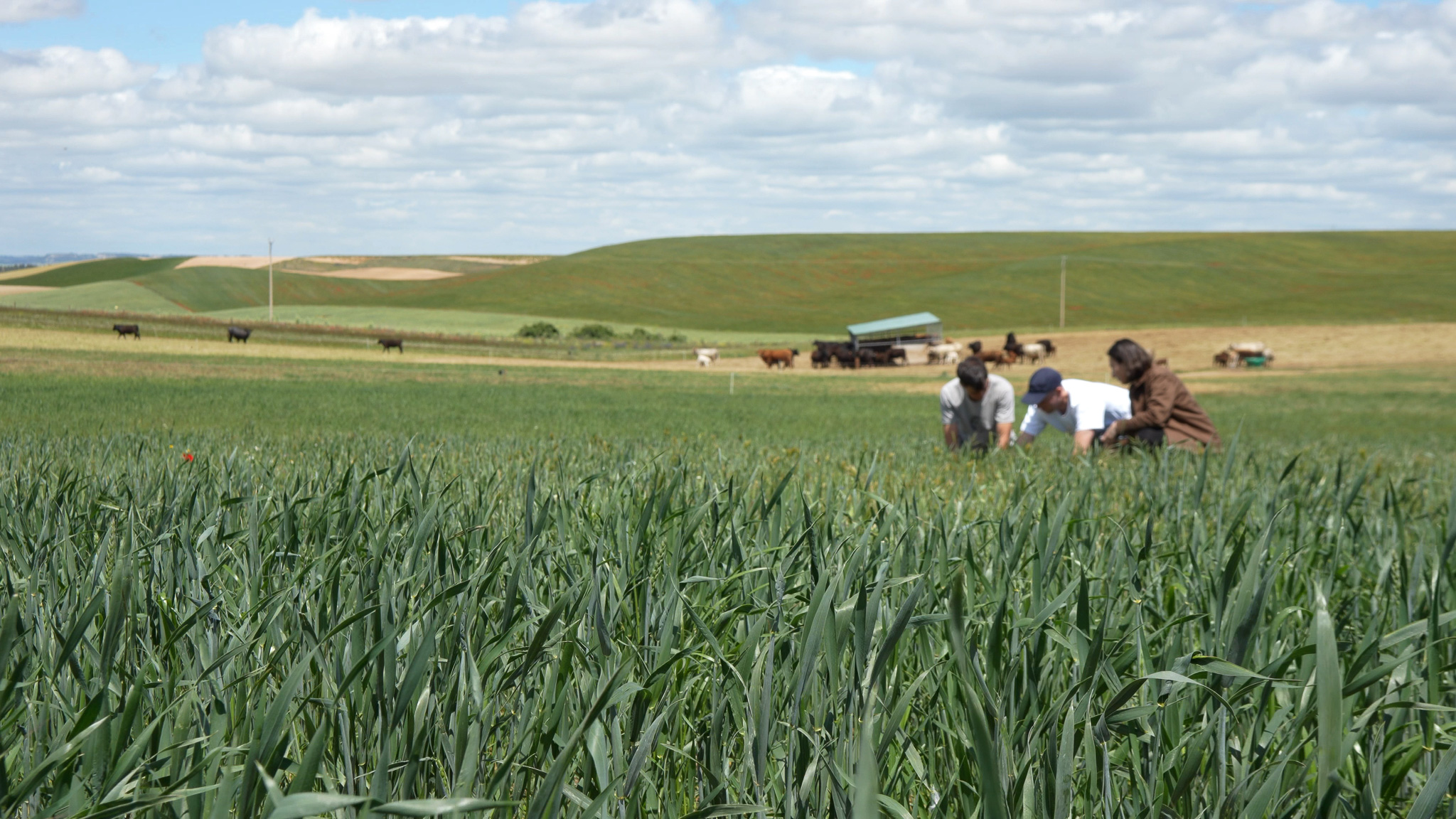
The way we look at the world determines what we see and subsequently how we act. The way agricultural research has been conducted has shaped the course of civilizations, billions of human lives, and the very life of our planet.
That’s why as pioneering farmers, we need to grow our own ways of learning about the empirical facts of our work and why we started the EARA Research Program.
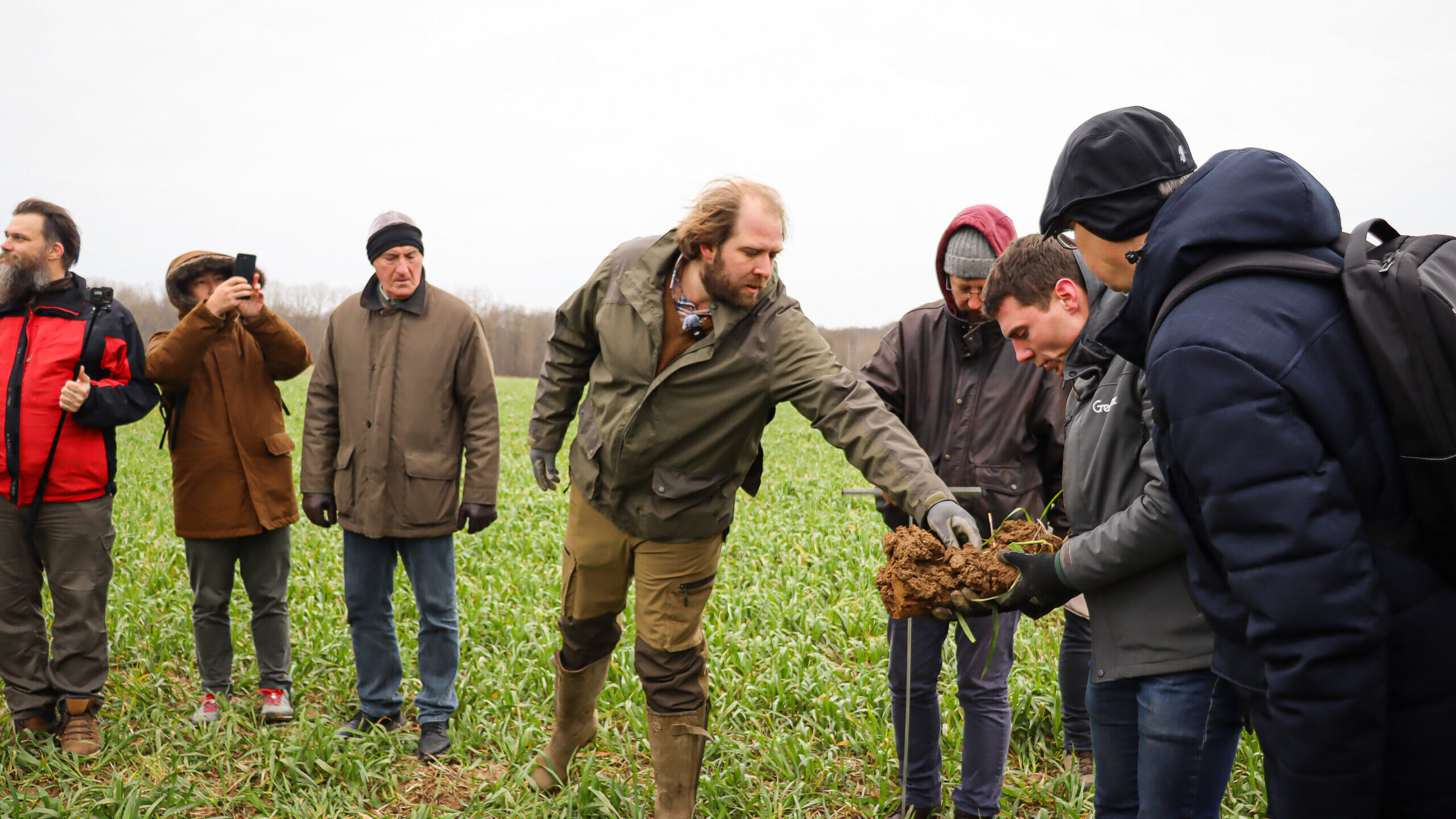
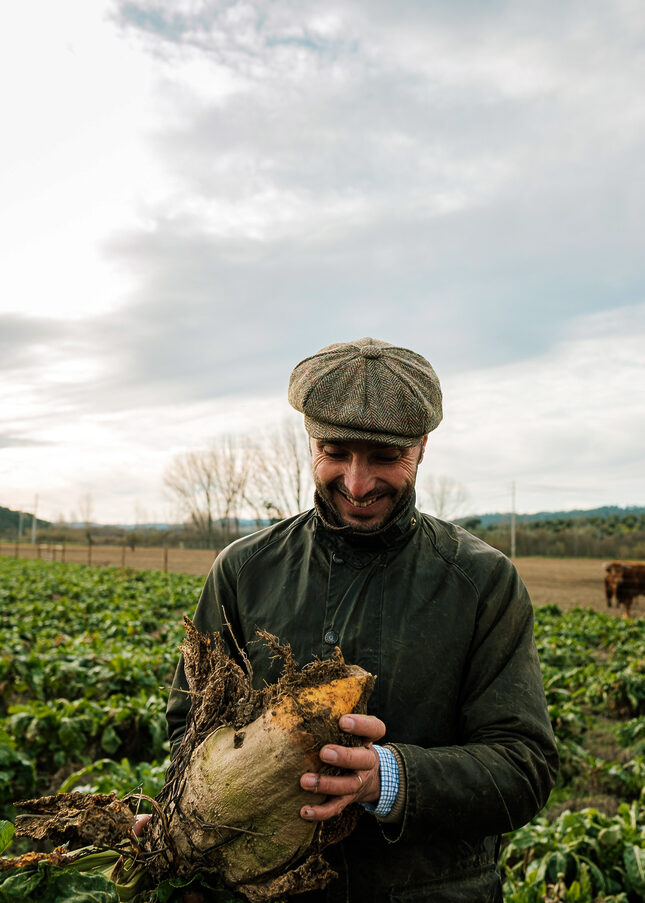
We take an epistemological approach with a long-term perspective on agricultural knowledge, grounded in the political ecology of land, biogeochemical cycles, and human innovation since the dawn of time.
In our research program our way of looking at agriculture is driven by real farmers. At the core is a simple yet powerful idea: to measure what pioneering farmers are achieving, across both agricultural and ecological dimensions, using a novel, farmer-centred index called Regenerating Full Productivity (RFP). Designed to be both comprehensive and easy to use, the RFP index offers a new way to understand and track the real-world productivity of agriculture.
Our research program is partitioned in phases. The first phase of research started in 2021 tested the first version of the index in practice, grounding it in the lived success of farmers already leading the transition.
Research Phase 1
We analyzed 78 farmers in 10 countries with a detailed total factor analysis from 2021 to 2023 and a satellite analysis from 2019 to 2024.
Results
Conventional, input-intensive farming is no longer fit for purpose, leaving Europe exposed to food insecurity, fragile rural economies, and mounting climate risks. These findings refute the assumption that food security depends on chemical-intensive agriculture. Regenerating forms of agriculture spanning agroecology, organic farming, conservation agriculture, and beyond are not only viable but already outperforming conventional systems in most contexts. Reducing, and ultimately eliminating, synthetic inputs is both feasible and beneficial economically and environmentally.
Outcomes once considered unattainable even within the timelines of the EU Green Deal by 2040 are already being demonstrated by farming pioneers across Europe.
Across Europe, these 78 farmers scored a remarkable 32% higher on the Regenerating Full Productivity Index with matching yields using more than 98% of national feed, compared to the EU average of more than 30% international feed imports.
Research Phase 1 was independently reviewed by
Theodor Friedrich (Retired-Ambassador FAO), André Leu (South Seas University), Stefan Schwarzer (Aufbauende Landwirtschaft e.V., Regenerate Forum, former UNEP author), Miha Curk (University of Ljubljana), Gunnar Thelin (Centre for Environmental and Climate science, Lund University), Ignas Bruder (Technical University Dresden), Lukas Kuhn (Technical University Hamburg), Jelle van Wesemael (Lead Data Analyst Soil Capital), William Higgins (Barka Fund), Merijn Dols (Managing Partner Now Partners), Philippe Birker (Climate Farmers), Michal Kravčík (People and Water NGO / Water Holistic, recipient Goldman Environmental Prize), Martin Kováč (Former Deputy Minister of Agriculture and Rural Development of the Slovak Republic), Luis Fernández-Carril (Academic manager of Sustainability and Professor of Ethics, Sustainability and Social Responsibility at Tecnológico de Monterrey), Markus Klein (Ekolive), Olivier de Schaetzen (Director Gens), Hamada Abdelrahman (Professor of Soil Science, Cairo University), Stephan van Vliet (Utah State University), Max Cooper (CDO Producers Trust)
Dive into the full report
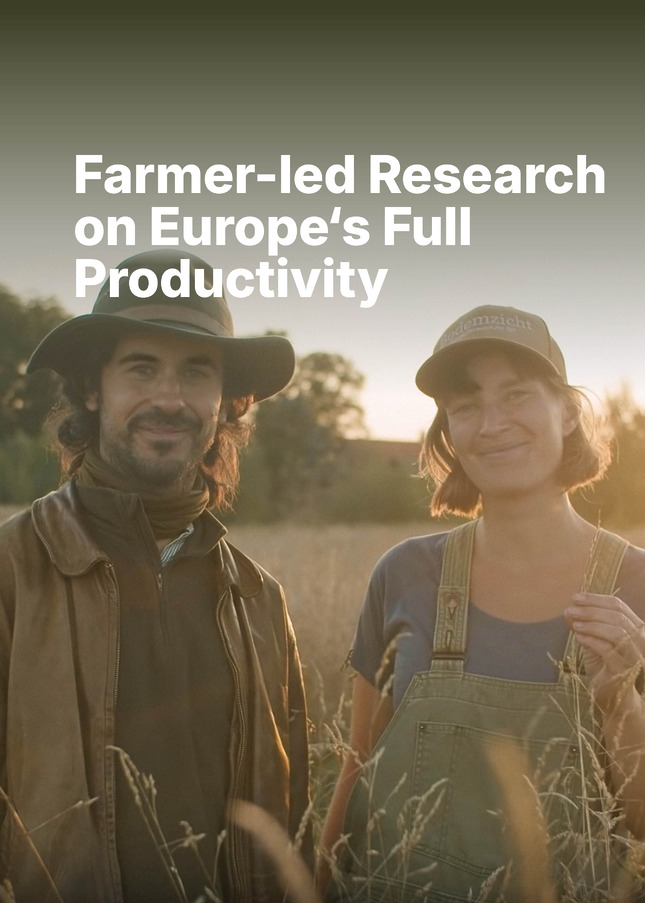
Farmer-led Research on Europe’s Full Productivity Phase 1
Published 15th June 2025Conventional agricultural models are not fit for purpose in the face of Europe’s compounding crises in soil health, biodiversity, food system resilience, and climate stability. These challenges cannot be solved by current input-intensive farming systems designed for short-term yields.
Research Phase 2
Building on the striking results of Phase 1, Research Phase 2 will expand to 250 farms with data collection in Q4 2026 and Q1 2027 and publication in Q3 2027 deepening our analysis.
Key dimensions
Total Factor Productivity | 2021-2025
Measuring outputs relative to the combined inputs of land, labour, capital, and materials. Each farm is benchmarked against the regional average for its production type, across arable and livestock systems, using farmer-reported data.
Remote Sensing | 2019-2026
Remotely-sensed ecological indicators, namely soil cover and photosynthesis, with others like water efficiency, plant diversity, and surface temperature to be further developed.
Soil Health | 2019-2025
In Phase 2 the soil dimension will show collected existing soil data from pioneering farmers, either from their records or with new soil tests, if resources allow us to, and compare them to different soil health inventories such as the EU LUCAS soil data as well as others.
Social Health | 2019-2025
Farmer-reported survey data categorised into three separate groups; Quality of life, community and knowledge sharing, and policy and economics. To be contrasted against the literature that shows a steady decline in job and life satisfaction among farming communities.
Team
Project Lead and Management
Will Anderson (EARA)
Simon Kraemer (EARA)
Data & Statistical Analysis
Andrea Manrique Yus (Independent)
Evangelia Kagiali (Independent)
Data Architecture & Lead
Simon Ripphausen (ETH Zurich)
Remote-sensing
Paolo dal Lago (Wageningen University & Research)
EARA farmer-scientists
Yann Boulstreau
Gunnar Thelin
Juuso Joona
Diego Barcena Menendez
Miha Curk
Get in touch with the team