Edmondo Soffritti
La Petrosa
Location: Cilento National Park, Salerno
Farm Size: 70 ha
Methods: Cultural Events & Gatherings Farmer-to-Farmer Learning Internships & Apprenticeships Living Labs & Pilot Projects On-Farm Training & Workshops Research Partnerships (universities, NGOs) School & Youth Education Programmes Volunteering WWOOF & Farm Stays
Practices: Biological Pest Control Composting & Compost Extracts Crop Rotation & Diversification Green Manure Keyline Design Policulture & Intercropping Rotational Grazing Seed Saving & On-Farm Breeding Use of Locally Adapted Varieties
Types: Agroecology Agroforestry Horticulture (vegetables, fruit, herbs) Market Gardening Mixed Farming (crop-livestock integration) Organic Pasture-Based Livestock Systems
Building from the ground up
I was not at all satisfied with my work. Year after year, it was becoming harder to grow crops on my land. By using conventional farming methods, I was making the soil more and more infertile.
The ecological transition has been a long and challenging journey. We began by reducing tillage and completely eliminating chemical inputs. We then started using cover crops, and planted trees and hedges to increase the biodiversity of our agricultural ecosystem. We also began making use of all the farm’s organic waste by producing compost, and we increased our livestock numbers by introducing rational grazing.
Today, the farm produces 90 per cent of the inputs it needs for cultivation, and we are focusing on optimising all the agroecological practices we use.
Regenerating the land and the community
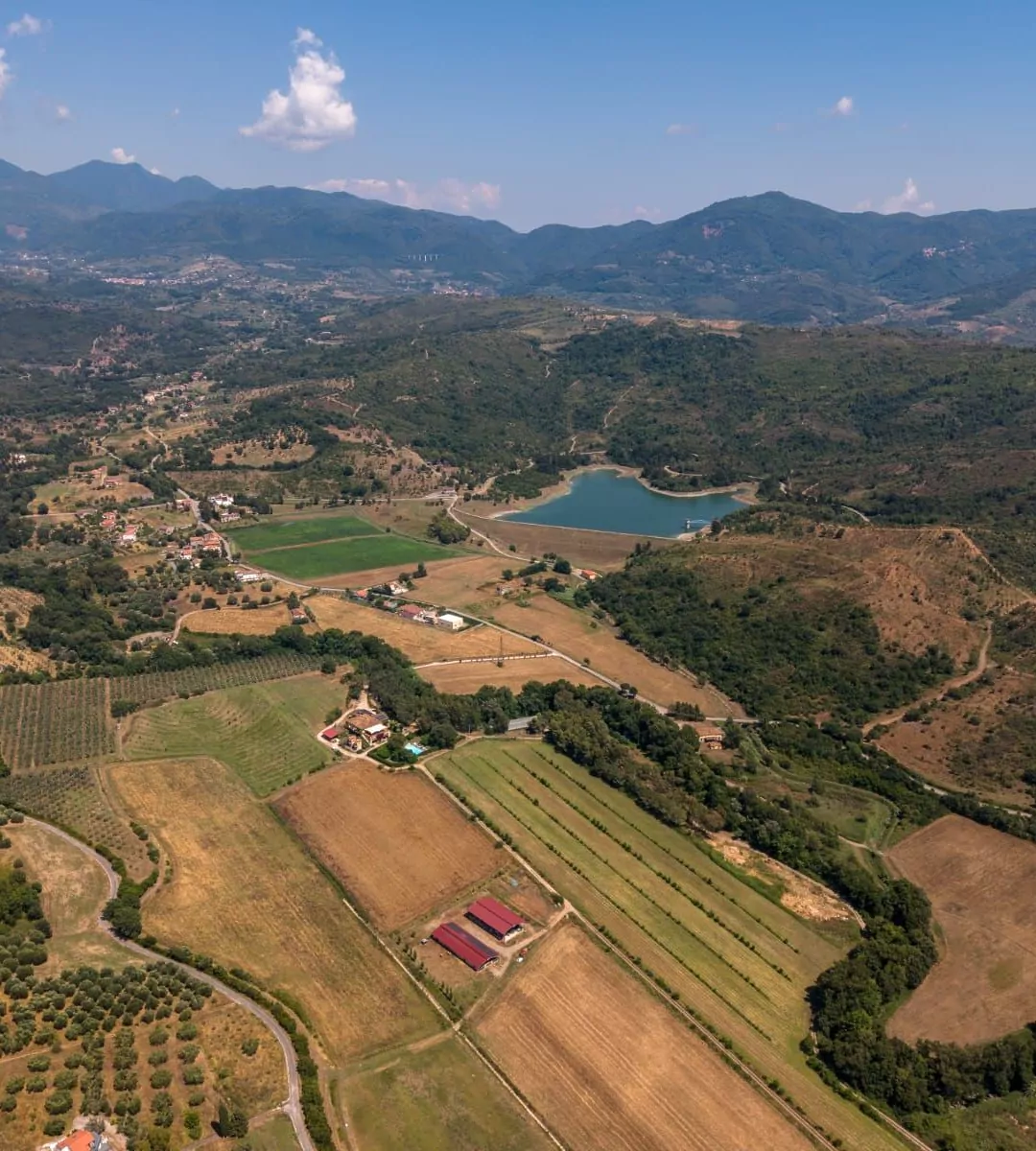
The changes have been clear to see. The clay-based soil has become easier to work, and waterlogging has decreased because the soil absorbs water better. The soil now smells wonderful!
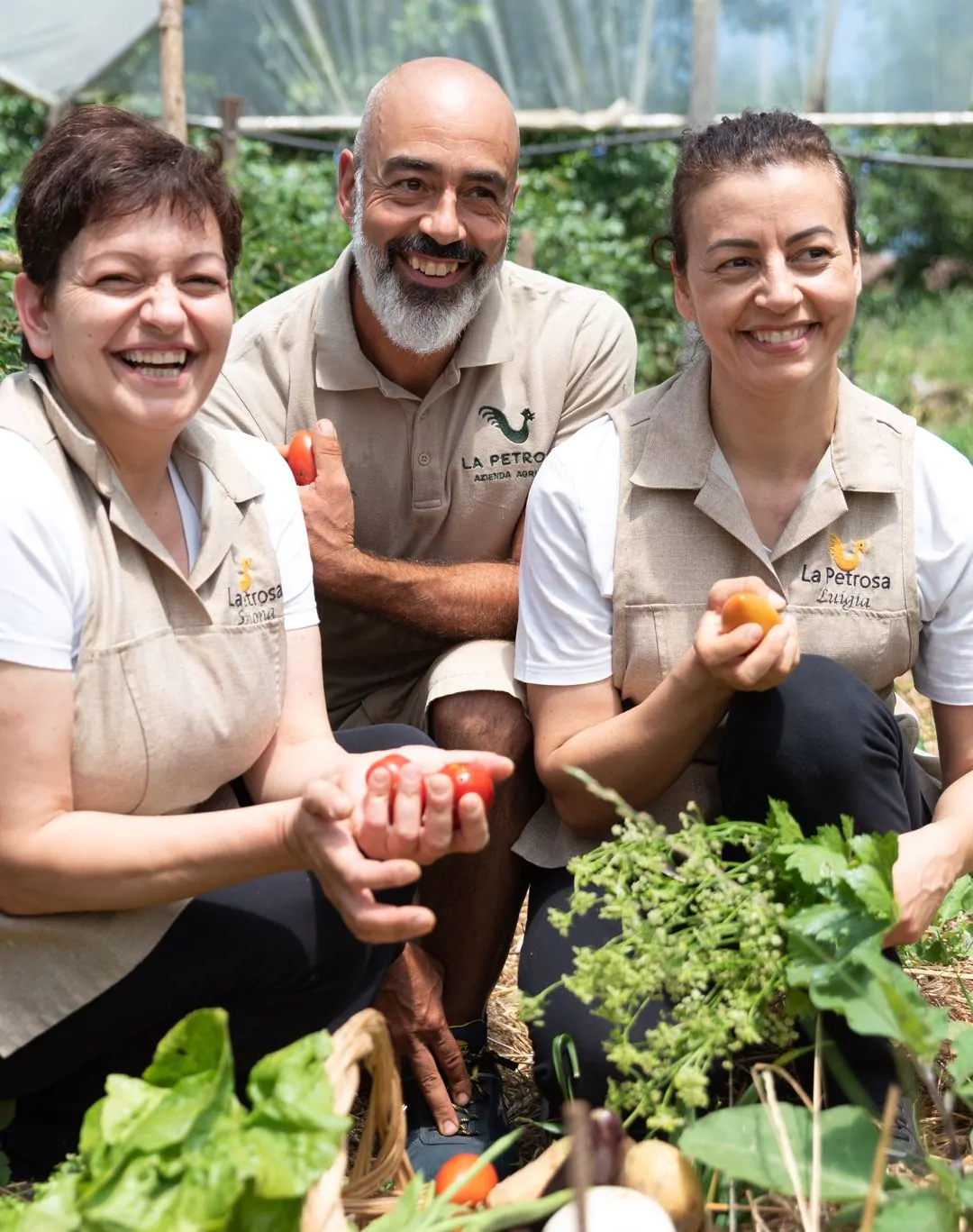
We have also re-established a strong bond with the local community, and we have started selling our produce directly to the public. Staff turnover has fallen too. Our team members have come to understand the importance of the work we do, and they are proud of it.
Practices
Composting & Compost Extracts
We started composting our animals’ manure by purchasing a wood chipper to shred all the prunings.
Subsequently, as this wasn’t enough, we sourced a large quantity of wood waste, ideal for compost production, from a number of forestry businesses in our area.
We then built a new barn using the deep-litter system to optimise compost production.
We are now also using earthworms to speed up the maturation process.
Biofertiliser & Biological Inputs
Challenges & Solutions
In line with the circular economy approach, we have also started to make use of other organic waste produced on the farm.
For example, the whey produced during cheese-making in our dairy is reused to produce an organic fertiliser, which we apply as a foliar spray or via fertirrigation to all our crops.
Crop Rotation and Diversification
Challenges & Solutions
To extend the crop rotation, we have introduced a number of new crops. Given that the farm is situated in a marginal agricultural area, the main challenge has been to find crops that could be used and/or sold directly on the farm, as there are no processing or sales networks in our area. We have therefore introduced pulses, cereals and oilseeds, both for human consumption and for livestock feed.
The system is now very complex and is beneficial from an ecological point of view, even though it is more difficult to manage.
Rotational Grazing
Challenges & Solutions
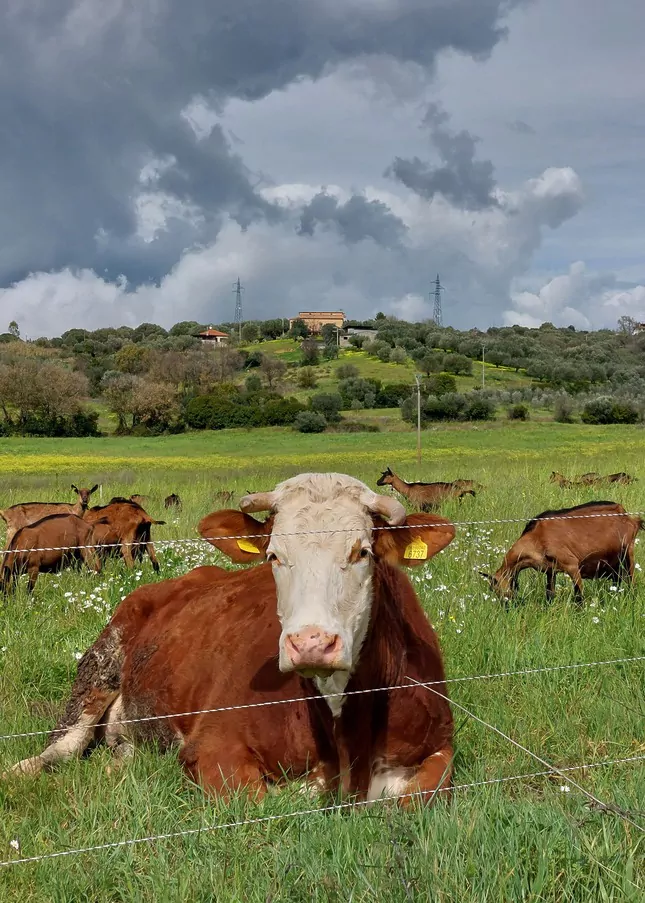
In our quest for greater sustainability in livestock farming, we introduced grazing on our land, but with limited success. We subsequently adopted the technique of rational grazing, and the results have been excellent; we have achieved very satisfactory levels of both environmental and economic sustainability.
Keyline Design
When establishing a new orchard of pistachio and almond trees on the hillside, we chose to plant them using the keyline method.
Using this system, we have managed to reduce erosion and increase the amount of water retained in the soil, thereby almost completely eliminating the need for irrigation.
Use of Locally Adapted Varieties
We have reintroduced wheat to the farm by reviving several local varieties, which we now preserve by selecting and re-sowing our own seeds every year
Similar Farms